Much of the mezcal at Azul is Espadín from Oaxaca: the same plant, from the same state. The bottles still don’t taste alike, and our two most expensive pours aren’t Espadín from Oaxaca at all.
Same plant, different places
Espadín (Agave angustifolia) runs through the list. Ilegal makes its Joven, Reposado and Añejo from Espadín and distills them in the Santiago Matatlán valley; Creyente blends one Espadín mezcal from Tlacolula with another from Yautepec. Montelobos works with organic, cultivated Espadín.
Where an agave grows shows up in the bottle. “Each plant spends eight, 12 years in the ground in interaction with the soil, the environment, the microclimate,” Esteban Morales of Derrumbes told Decanter.
Artisanal mezcal usually ferments without added yeast, so whatever lives in the vats and the air does the work. In a 2025 study of 15 artisanal fermentations at one distillery, Saccharomyces, the yeast behind bread and most beer, was not the dominant yeast in any of them.
Mexico’s mezcal standard, NOM-070, sorts mezcal into three categories by how it is made. Mezcal Artesanal, for example, must be cooked in pit or raised masonry ovens and distilled over direct fire in copper or clay stills.
Guerrero and Durango
Both are Clase Azul mezcals made from wild agave.
Clase Azul Mezcal Guerrero ($48) is made from Papalote (Agave cupreata), which grows wild in the mountains of Guerrero. It’s cooked for three to four days in a pit oven with volcanic rock and guamúchil firewood, then distilled over a wood fire in a copper alembic, Beverage Dynamics reported.
Clase Azul Mezcal ($35) comes from Durango and is made from Cenizo (Agave durangensis), which grows wild in that state. The brand credits Durango’s mineral-rich soil and natural springs for the strength and complexity of its flavor. Burrito Fiestero ($12), one of our least expensive pours, is also from Durango, from another producer.
Guerrero and Durango are both inside mezcal’s denomination of origin, which covers Oaxaca and several other states.
Ilegal’s Joven, Reposado and Añejo
The Joven ($16) is unaged. The Reposado ($18) spends 6 months in new and used American oak, and the Añejo ($20) spends 13. Because the agave is the same, what separates the three is time in oak.
At Azul
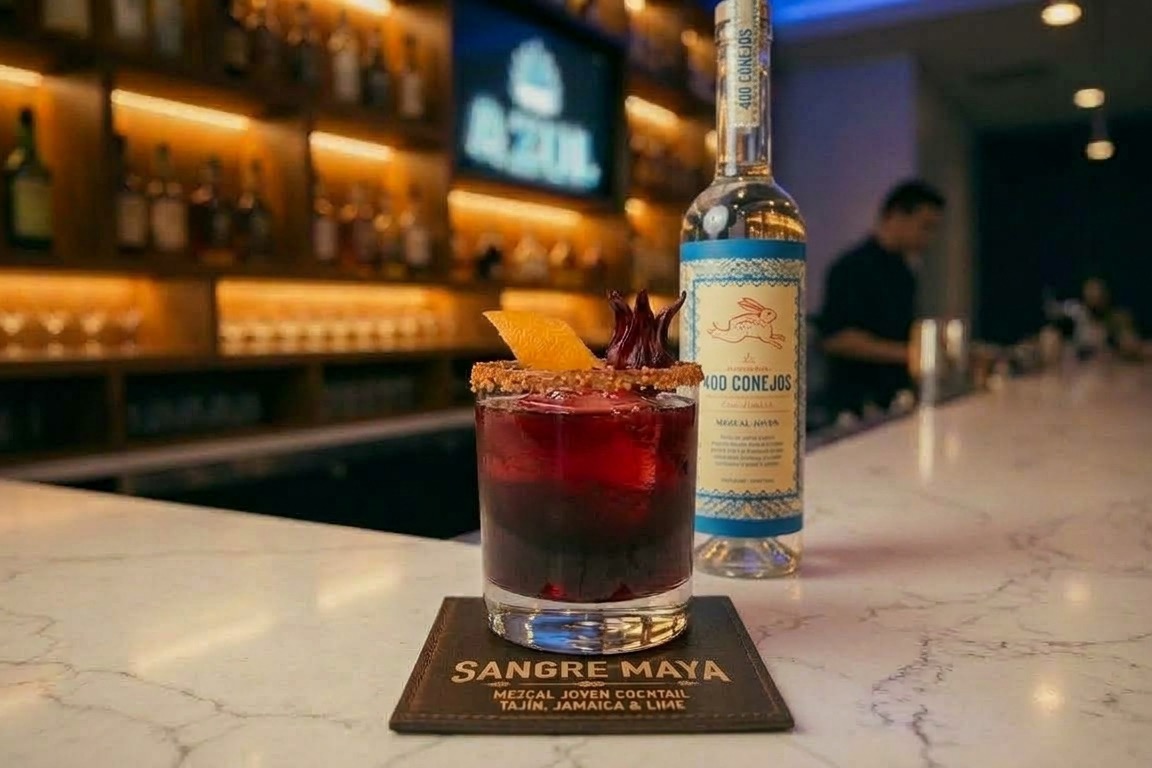
Ask the bartender what else we’re pouring. If you’d rather have mezcal in a cocktail, the Sangre Maya ($17) mixes 400 Conejos mezcal with agua de Jamaica (hibiscus), lime and agave nectar; it’s on the bar menu.
We’re open Monday through Friday, 4:00 PM to 11:00 PM, and Saturday and Sunday, 2:00 PM to midnight. Reserve online for parties of up to 8, or call or email for larger groups. Walk-ins are always welcome.
Please drink responsibly. You must be 21 or older to purchase alcoholic beverages.